
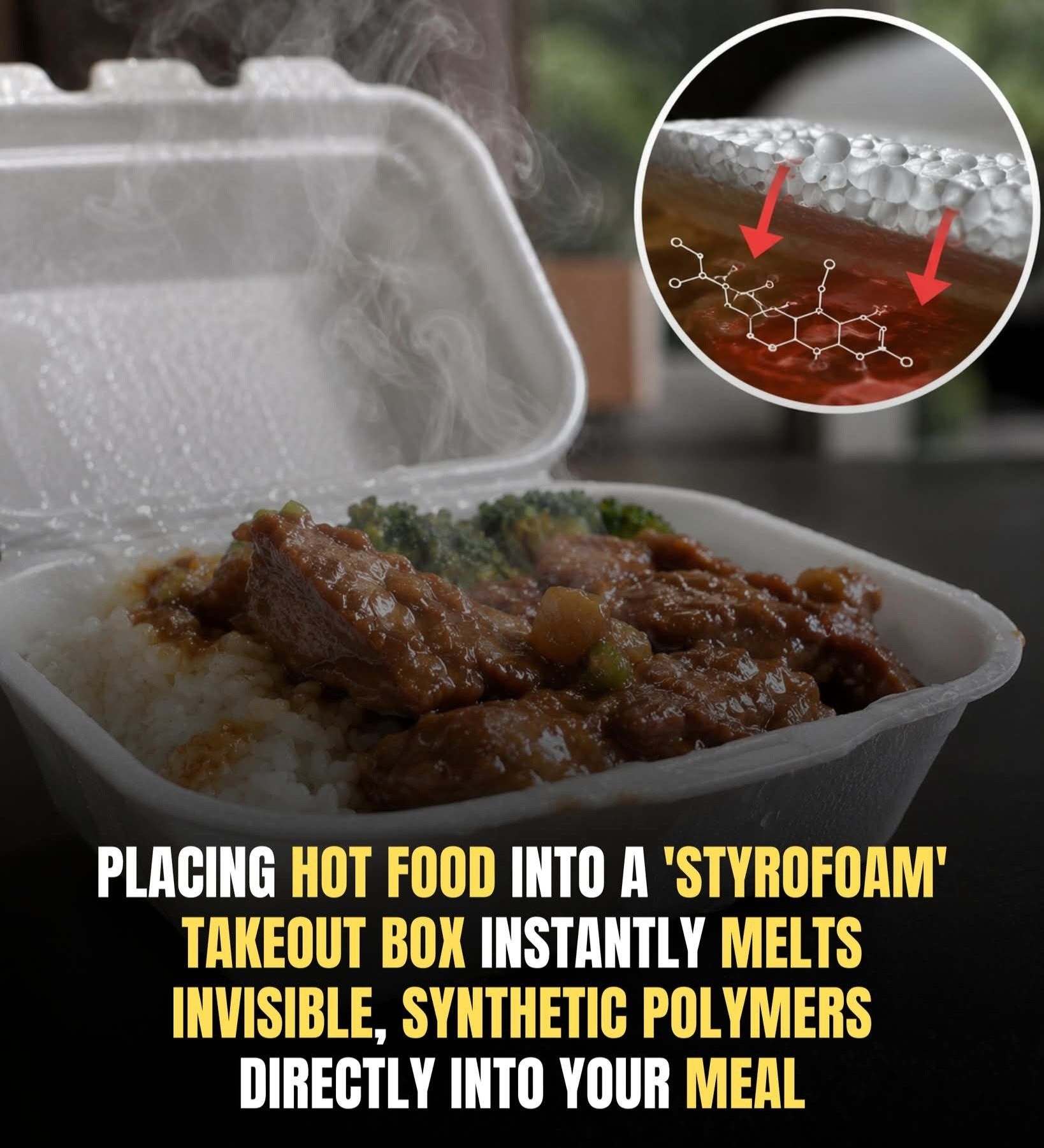
🍱 The Hidden Problem With Putting Hot Food in Styrofoam Containers
Grabbing a lightweight Styrofoam container for leftovers feels completely normal. Restaurants use them everywhere because they’re cheap, convenient, and excellent at insulating food. But many people rarely stop to think about what can happen when very hot or oily foods sit inside these containers for long periods.
Concerns about Styrofoam and food safety mainly center around heat, fat, and the potential release of certain chemicals from the plastic material into food.
While occasional exposure is unlikely to cause immediate harm, understanding how these containers behave under heat can help people make more informed choices.
🧪 What Is “Styrofoam” Actually Made Of?
What most people casually call “Styrofoam” is usually a form of expanded or extruded polystyrene.
This material became popular because it is:
- Lightweight
- Inexpensive
- Good at insulating heat
- Easy to manufacture
At room temperature, polystyrene remains relatively stable and keeps its shape well.
🔥 Why Heat Changes the Situation
The main concern begins when very hot food is placed into polystyrene containers.
Heat can:
- Soften the material
- Increase chemical migration
- Break down parts of the plastic over time
This effect may become stronger when the food is:
- Extremely hot
- Oily or fatty
- Acidic
Fatty foods in particular may interact more easily with certain compounds found in plastics.
⚠️ What Is Styrene?
One of the chemicals associated with polystyrene is styrene.
Styrene is used during the production of polystyrene products and has been studied extensively in toxicology and environmental health research.
👉 Read more on the next page…
