
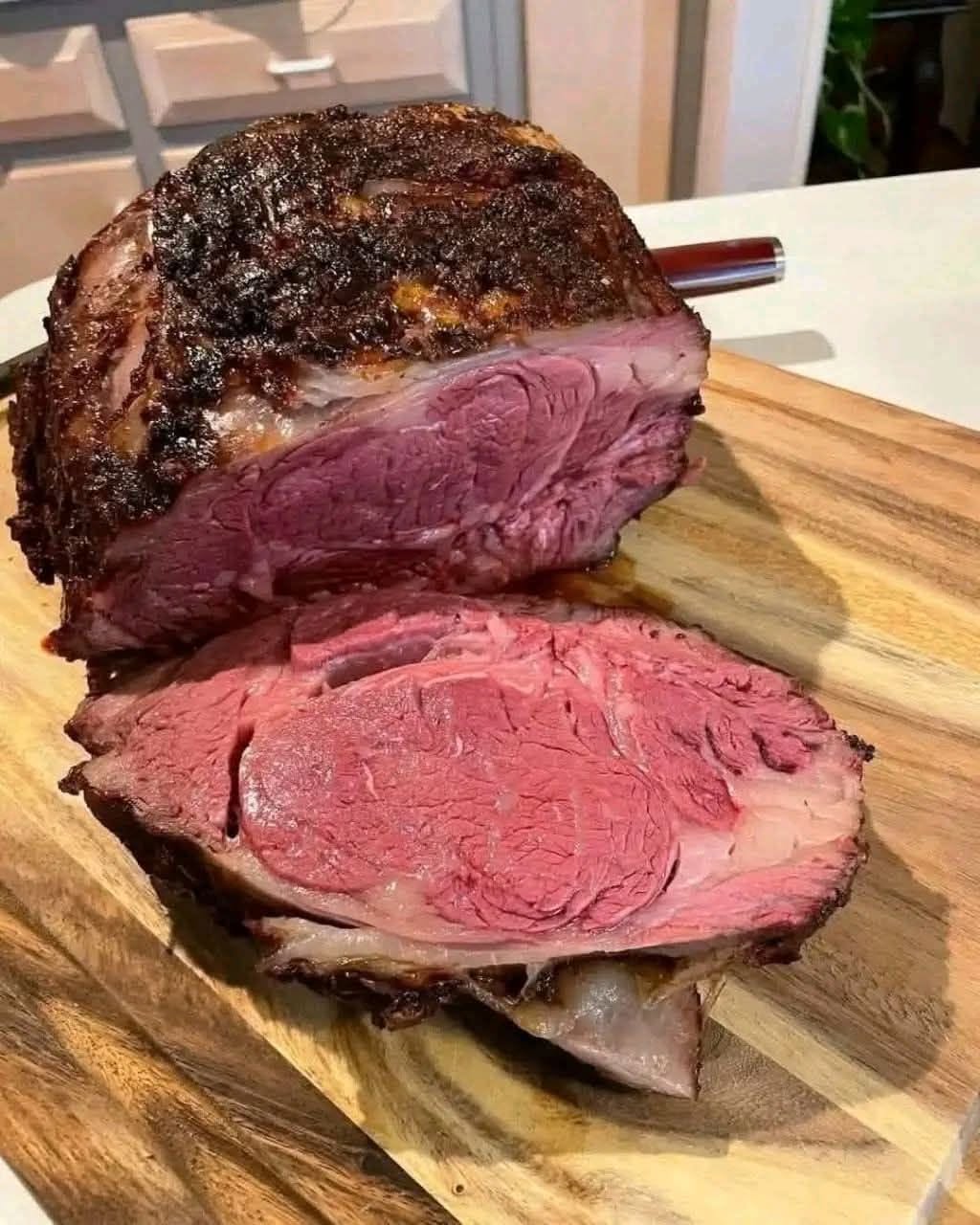
 Preparation (Formation)
- Remove the roast from the fridge at least 2–3 hours before cooking to bring it to room temperature.
- Pat it dry with paper towels (this helps create a crust).
- Mix olive oil/butter, garlic, herbs, salt, and pepper into a paste.
- Rub the mixture all over the roast, including the sides.
- Place the roast bone-side down on a rack in a roasting pan.
 Cooking Instructions
Method 1: Reverse Sear (Recommended for perfection)
- Preheat oven to 120°C (250°F).
- Roast slowly until internal temperature reaches:
- 48–50°C for rare
- 52–54°C for medium-rare
- 57–60°C for medium
- Remove roast and rest for 20–30 minutes.
- Increase oven to 260°C (500°F).
- Return roast and sear for 5–10 minutes until crust forms.
Method 2: Traditional High-Heat Start
- Preheat oven to 230°C (450°F).
- Roast for 20 minutes.
- Reduce heat to 160°C (325°F).
- Continue roasting until desired internal temperature is reached.
- Rest before slicing.
 Internal Temperature Guide
- Rare: 50°C (122°F)
- Medium-rare: 54°C (130°F)
 best balance
 - Medium: 60°C (140°F)
- Well-done: not recommended (loses tenderness)
 History
Prime rib has roots in classic European roasting traditions, particularly in Britain, where it was known as a “standing rib roast.” It became a staple in American steakhouses in the 19th and 20th centuries, symbolizing indulgence and celebration. Its popularity continues due to its unmatched flavor and impressive presentation.
 Cooking Methods Overview
- Oven roasting (classic & most common)
- Reverse sear (best for even cooking)
- Grill roasting (adds smoky flavor)
- Sous vide + sear (ultra-precise, modern method)
 Why People Love Prime Rib
- Extremely tender and juicy
- Rich, buttery flavor from marbling
- Perfect for family gatherings and holidays
- Feels like a restaurant-quality meal at home
 Serving Suggestions
- Serve with au jus or horseradish sauce
- Pair with:
- Roasted potatoes
- Creamed spinach
- Yorkshire pudding
- Gravy
 Tips for Perfection
- Always use a meat thermometer
- Let it rest before slicing (crucial!)
- Slice against the grain for tenderness
- Don’t skip drying the surface—it helps the crust
 Conclusion
A perfect prime rib roast is all about patience, temperature control, and quality ingredients. Whether you’re cooking for a holiday or just want to impress, mastering this dish guarantees a memorable, mouthwatering experience.
Pages: 1 2
